


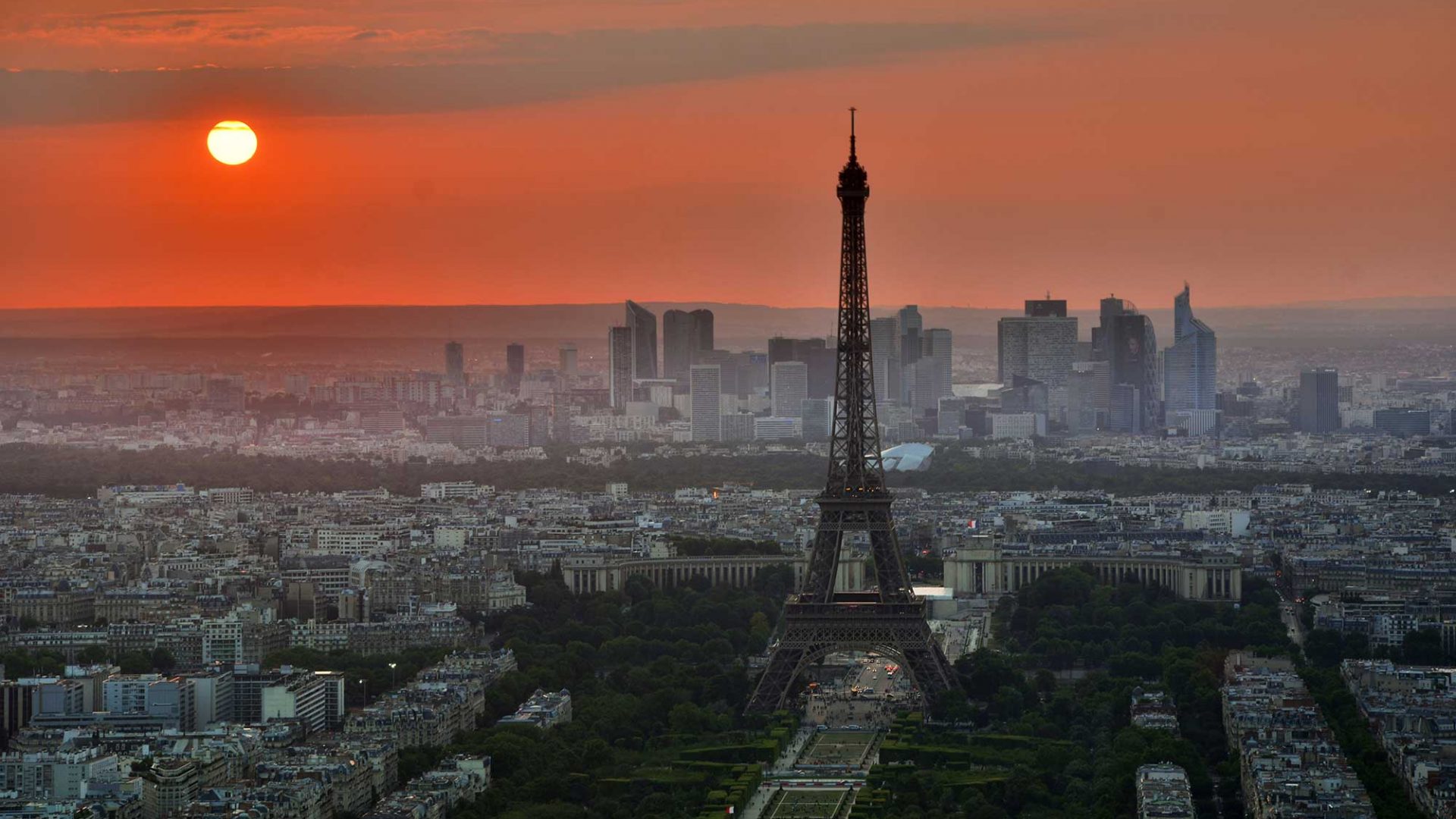

Planning a multi-city Europe trip can feel overwhelming without the right structure. From Paris cafés to Berlin culture and the South of France coastline, the possibilities feel endless.
Organising a multi-city Europe trip requires more than just choosing destinations. it requires smart routing and strategic planning
Over the years, I have noticed that most travellers make the same planning mistakes and those mistakes cost unnecessary time, money, and energy.
Here’s how to structure a multi-city Europe trip properly so it feels seamless rather than stressful.

⸻
Avoid Flying In and Out of the Same Airport on a multi city Europe Trip
One of the most common mistakes is booking return flights in and out of the same city.
For example:
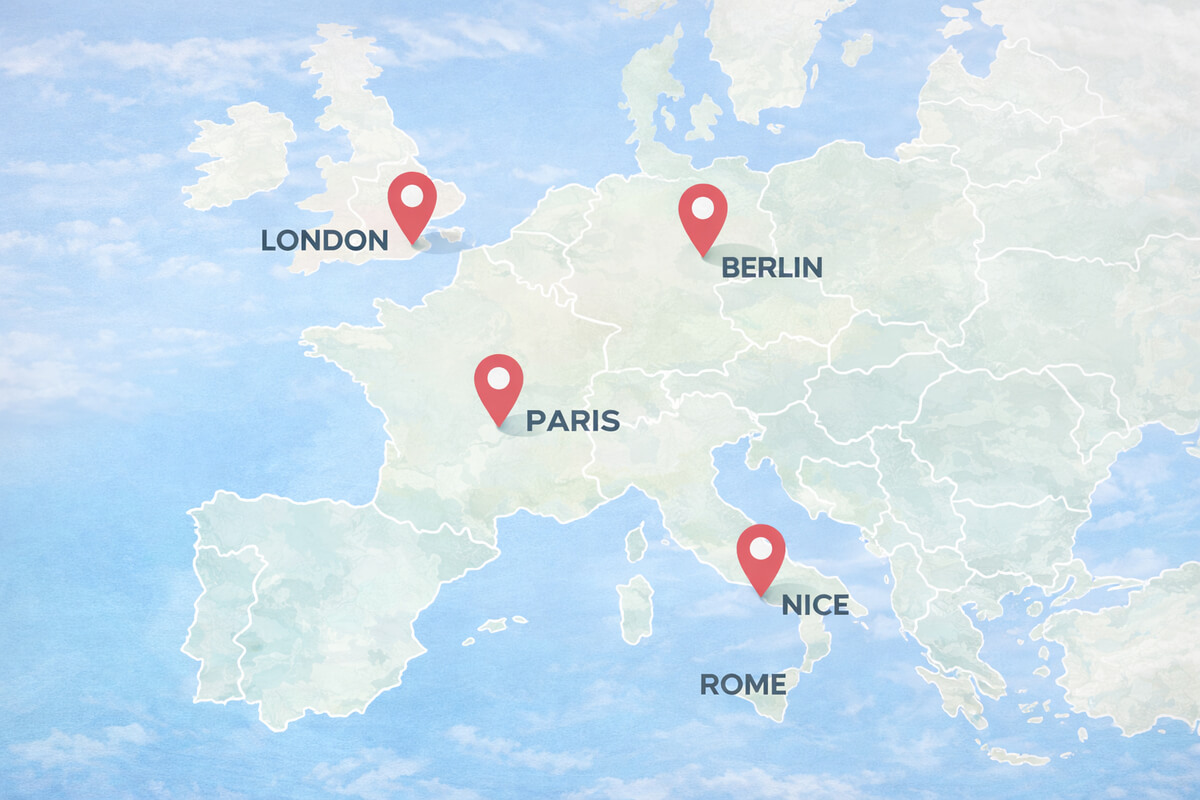
Paris → Berlin → South of France
Then travelling all the way back to Paris just to catch the flight home.
Instead, consider booking what’s known as an open-jaw ticket.
Fly into one city and depart from another.
For instance:
Arrive in Paris.
Depart from Nice.
This simple adjustment can eliminate backtracking, reduce travel time, and make your entire itinerary flow naturally.
⸻
Should you Take the Train or Fly between European Cities?
Europe is famous for its rail network and in many cases, trains are fantastic.
However, they are not always the smartest option.
A simple guideline I often use:
• Under 3 hours by train: Rail usually makes sense.
• Over 6–7 hours: A short flight may save significant time and energy.
For example, Paris to Berlin by train takes around eight hours. A direct flight takes under two.
The best choice depends on your travel style, whether you value scenic journeys or efficiency but it should always be a conscious decision, not an automatic one.

⸻
Plan Around Geography, Not Just a Bucket List
It is easy to choose cities based purely on what you want to see.
But the order in which you visit them matters.
Instead of jumping back and forth across the map, structure your route logically:
North to south.
West to east.
Or along a clear travel corridor.
Europe may look compact on a map, but inefficient routing can add unnecessary travel days and fatigue.
Simply put, smart geography equals smoother travel.
Example: 10-Day Multi-City Europe Trip Route
If you are planning a 10-day multi-city Europe trip, a logical route might look like:
• Days 1–3: Paris
• Days 4–6: Amsterdam
• Days 7–10: Rome
This structure avoids backtracking and keeps travel days manageable.
⸻
Choose the Right Neighbourhood: Especially for Longer Stays
If you are spending more than a few nights in one place, for example, two weeks in Paris for a language course or remote working: your neighbourhood matters just as much as the accommodation itself.
Consider:
• Is the area walkable?
• Check that Public transport is easily accessible.
• Look for nearby cafés, grocery stores, and daily essentials.
• Make sure you close to where you’ll spend most of your time.
Ultimately, long stays require a different mindset than short city breaks. Comfort and convenience become priorities.
⸻
Build in Space During Your Multi-City Europe Trip
Multi-city trips can easily become over-packed.
Not every day needs to include a train, flight, museum, and reservation.
Some of the best moments in Europe happen in between. wandering through a local market, discovering a quiet side street, or spending an unplanned afternoon by the water.
A well-structured itinerary includes breathing room.
At the same time, it helps to identify one or two must see experiences in each city and secure them in advance.
Especially during peak season. Pre booking major attractions can save hours of queueing and prevent last-minute stress, while still leaving space for spontaneous moments
⸻
Making your Multi-City Europe Trip Feel Seamless
A multi-city Europe trip shouldn’t feel complicated.
With the right structure, it becomes effortless.
- No unnecessary backtracking.
- You wont have wasted travel days.
- There wont be any last-minute scrambling between airports and train stations.
It’s not about seeing more cities. It is about travelling smarter between them.
When structured correctly, a multi-city Europe trip becomes seamless rather than stressful. With smart routing, balanced travel days, and the right neighbourhood choices, you can experience multiple destinations without burning out
That’s the difference thoughtful planning makes.
If you are currently mapping out a Europe trip and want a second opinion on routing or accommodation strategy, we are always happy to help guide you in the right direction.
⸻
Frequently Asked Questions About Planning a Multi-City Europe Trip
How many cities should I include in a multi-city Europe trip?
For most travellers, 2–4 cities in 10–14 days is ideal. Trying to fit too many destinations into a short timeframe often leads to travel fatigue and wasted transit days. Focus on quality over quantity.
Is it better to fly or take trains between European cities?
It depends on distance.
• Under 3 hours: trains are usually efficient and convenient.
• Over 6 hours: a short flight may save significant time.
Always compare total travel time (including airport transfers), not just flight duration.
What is an open-jaw flight ticket?
An open-jaw ticket allows you to fly into one city and depart from another. For example, arrive in Paris and depart from Nice. This prevents unnecessary backtracking and creates a more efficient route.
How far in advance should I book trains and attractions?
High-speed trains and major attractions should ideally be booked 2–8 weeks in advance, especially during peak season (May–September). Booking early often means better prices and shorter queues.
How do I avoid overpacking my itinerary?
Plan travel days carefully and avoid moving cities every 1–2 nights. Build in buffer time for rest, local exploration, and unexpected discoveries. A well-structured itinerary always includes breathing room.
Is Europe easy for multi- city travel?
Yes, Europe is one of the easiest regions in the world for multi-city travel thanks to high- speed trains, short- haul flights, and efficient transport connections.
⸻
About Escapade Travels
Escapade Travels is a UK-based travel consultancy specialising in group travels, honeymoon planning, multi-city Europe trips, long stays, and seamless itinerary planning. Fully ATOL protected, we also provide cruise, flight, and hotel bookings tailored to your travel style. if you’d prefer help structuring your itinerary. Escapade Travels can assist with tailored multi city planning.